 comparison
How to Decide If High Purity Peptide Synthesis Is Worth It
Last Updated: 31 October 2026
Quick Summary
High purity peptide synthesis is worth the extra cost when impurities could change your result, such as in quantitative bioassays or structural studies. For initial screening with a robust assay, a standard grade usually delivers more usable material for the same budget.
- Purity is the percentage of the target peptide, measured by methods such as HPLC, not total vial content.
- Compare the premium against the cost of one failed or repeated experiment, including reagents and technician time.
- Confirm the batch-specific Certificate of Analysis states the method and, where concentration matters, net peptide content.
- Higher grades add purification steps, which lower recovery and raise the cost per usable milligram.
- Match the grade to the application rather than defaulting to the highest available purity option.
Table of Contents
- What Peptide Purity Actually Measures
- What Peptide Purity Do I Need for My Experiment?
- What Drives the Cost of Higher Purity Grades
- Cost Versus Outcome: A Practical Decision Framework
- How Peptide Purity Testing Methods Work
- Reading a Peptide Certificate of Analysis
- Requesting the Right Peptide for Your Next Order
- Frequently Asked Questions
What Peptide Purity Actually Measures
High purity peptide grades are defined by the percentage of the target peptide in a sample, measured by analytical methods such as HPLC. It is not the same as the total amount of material in a vial. A vial can contain a high proportion of the correct sequence and still hold a low net amount of peptide once salts, water and counter-ions are accounted for.
This distinction matters when you compare suppliers. Check that each supplier states its vial contents and provides a batch-specific Certificate of Analysis (COA), so you can check both the purity figure and what it refers to.
Purity versus peptide content, yield and recovery
A purity figure tells you what fraction of the detected material is the intended sequence. Peptide content tells you how much of the weighed powder is actually peptide. The two can differ substantially, and a 98% purity reading does not guarantee that 98% of the vial mass is peptide.
Yield describes how much material is recovered after synthesis and purification. Higher purity usually means additional purification steps, which lower recovery. For a research team, that trade-off affects both the cost per usable milligram and the amount left over for repeat work.
What Peptide Purity Do I Need for My Experiment?
The right purity level depends on what the peptide will be used for. A screening assay with a wide margin for error tolerates lower purity than a quantitative study where impurities could alter the result. Matching the grade to the application avoids paying for precision you will not use.
Research screening versus quantitative assays
Initial screening, where you are checking whether a peptide has any activity at all, is generally less sensitive to impurities. Quantitative bioassays, where dose-response accuracy matters, are more sensitive. Impurities can contribute to signal, shift apparent potency or introduce variability between batches.
If your assay depends on precise concentration, a higher-purity grade and a reliable net peptide figure become more important. If you are simply confirming activity, a lower grade may be enough.
Application-specific recommendations across use cases
Use the table below as a starting framework rather than a rule. Confirm the appropriate grade with your own protocol and any internal quality requirements. Peptide purity levels for antibody production are covered in a separate guide.
| Application | Sensitivity to impurities | Typical priority |
|---|---|---|
| Initial screening | Lower | Cost and quantity |
| Quantitative bioassay | Higher | Purity and net content |
| Structural or mass studies | Higher | Verified identity and purity |
| Teaching and method practice | Lower | Consistent, documented samples |
What Drives the Cost of Higher Purity Grades
Higher purity is not a single upgrade; it is a series of additional synthesis controls and purification steps, each of which adds time, solvent, consumables and material loss. Understanding those cost drivers lets you judge whether a quoted premium reflects real additional work or simply a different pricing convention.
Synthesis, purification and pricing by peptide length
Many providers quote by residue, meaning the number of amino acids in the sequence. A shorter peptide is generally straightforward to make and purify; a longer sequence is harder to produce cleanly and often attracts a higher per-residue rate and a larger minimum order.
The main cost drivers are:
- Length. Each added residue increases the number of coupling and deprotection steps and the chance of truncated or deleted sequences. Longer sequences usually need more chromatography to reach the same purity grade.
- Scale. Small research quantities carry a fixed set-up cost that dominates the quote; larger batches spread that cost and usually lower the effective price per milligram.
- Purification target. Crude material is the cheapest option. Moving to a higher HPLC grade adds column time, solvent and yield loss, and the premium is usually quoted separately from the synthesis line.
- Sequence difficulty. Hydrophobic stretches, aggregation-prone regions and sequences with many similar residues are harder to separate from impurities and may need repeated purification.
- Modifications and labels. Fluorescent tags, biotin, phosphorylation, cyclisation and non-natural amino acids add synthesis steps and often reduce yield, so they raise both the base price and the purification premium.
- Documentation and testing. Additional analytical work, such as extra mass confirmation or net peptide content determination, adds a modest but real charge.
Publicly listed per-residue figures are not always directly comparable between suppliers, because they may exclude purification, cleavage, counter-ion exchange, quality testing or delivery.
For current pricing on JGPep+ products, see the JGPep+ website or request a quote that states the purification grade and the analytical data supplied with the batch.
Cost Versus Outcome: A Practical Decision Framework
Most guidance treats purity and cost as separate topics. The more useful question is whether the premium for a higher grade is smaller than the expected cost of the problems it prevents. That comparison depends on your assay, your downstream use and the cost of a failed or inconclusive run.
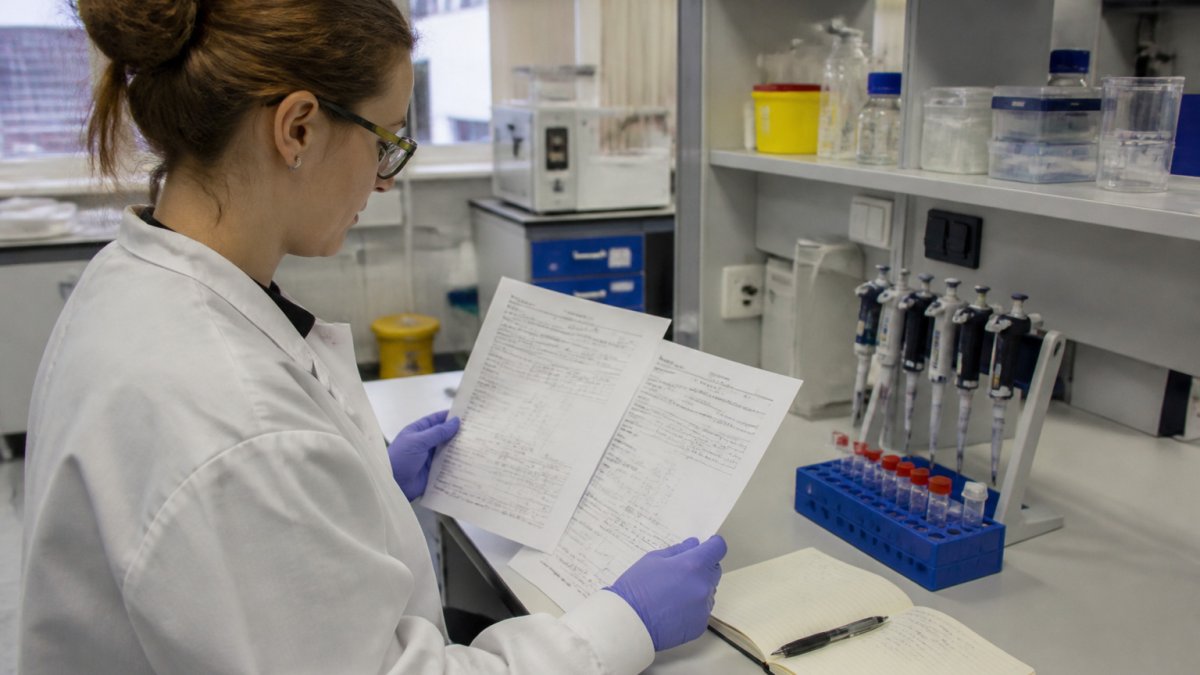
A decision path you can apply before ordering
Work through the following steps in order. Stop at the first step that settles the question for your project.
View the complete research peptide catalogue →
- Define the decision the peptide supports. If you are asking whether a sequence has any activity at all, a lower grade is usually adequate. If you are measuring potency, affinity or concentration, impurities can shift the result and a higher grade is more defensible.
- Check assay sensitivity. A wide-margin screening assay tolerates more impurity than a quantitative bioassay, a cell-based assay or a structural study where a co-eluting impurity could be mistaken for signal.
- Estimate the cost of one failed or repeated run. Include reagents, technician hours, instrument time and the delay to your next result. If that figure exceeds the price difference between grades, the upgrade is usually justified.
- Count expected repeats. If your workflow typically needs two or three runs to reach a stable result, the value of reducing batch-to-batch variability rises accordingly.
- Confirm what the certificate reports. A higher purity figure is only useful if the batch documentation also states the method and, where concentration matters, the net peptide content.
Total cost of ownership, including repeat experiments
The purchase price is one line item. Total cost also includes wasted reagents, technician hours, instrument time, troubleshooting and the delay to your next result. A common pattern is that a single avoided repeat experiment covers the premium for a higher grade, after which the upgrade is effectively cost-neutral or better.
A simple test: estimate the fully loaded cost of one repeat experiment, then compare it with the premium for the higher grade. If one avoided repeat covers the difference, the upgrade pays for itself.
Application-specific guidance
| Application | Impurity sensitivity | Usual priority | Practical recommendation |
|---|---|---|---|
| Initial screening | Lower | Cost and quantity | A standard grade with a clear certificate is usually sufficient |
| Quantitative bioassay | Higher | Purity and net content | Choose a higher grade and confirm net peptide content for molar calculations |
| Structural or mass studies | Higher | Verified identity and purity | Require mass confirmation and a stated HPLC method |
| Cell work | Moderate to higher | Consistency between batches | Favour a grade with low batch-to-batch variability and full documentation |
| Regulated or therapeutic development | Highest | Documentation and traceability | Expect a higher grade with full analytical and batch records |
| Teaching and method practice | Lower | Consistent, documented samples | A standard grade with a certificate is adequate |
Use this table as a starting framework rather than a rule. Confirm the appropriate grade with your own protocol and any internal quality requirements.
How Peptide Purity Testing Methods Work
Purity is most commonly measured by high-performance liquid chromatography (HPLC), which separates the target peptide from related impurities. Mass spectrometry (MS) then confirms that the main peak has the expected molecular mass. Compare HPLC and MS analysis side by side to see how each method contributes to the result. Together, the two methods show both how pure the sample is and whether it is the right molecule.
Results from these methods appear on the COA, which is the document you should read carefully before using any batch.
Reading a Peptide Certificate of Analysis
A COA records the identity, purity and key quality data for a specific batch. Read it for the batch number, the measured purity, the method used and the mass confirmation. Review the ten essential components of a peptide COA to check that nothing important is missing. Compare these against the product you ordered.
How to interpret purity certificates and analytical methods
Check that the purity value is tied to a named method, usually HPLC at a stated wavelength. Learn how to interpret peptide HPLC analysis to read the chromatogram behind that figure. A purity figure without a method is harder to verify.
Note whether the COA reports net peptide content as well as purity. If it does not, be cautious when calculating molar concentrations, because the weighed mass may include non-peptide material.
Batch-specific documentation helps when results vary. If one batch performs differently, the COA lets you trace the difference to a specific lot rather than guessing.
Requesting the Right Peptide for Your Next Order
Before ordering, define the application, the required purity grade, the quantity and the documentation you need. Ask the supplier for the batch-specific COA and confirm what purity figure and method it reports.
Match the grade to the experiment rather than defaulting to the highest available purity option. For quantitative work, a higher grade with a clear net content figure is generally more suitable. For screening, a lower grade may give you more usable material for the same budget.
Once you have chosen a grade, you can browse the JGPep+ catalogue to compare available products.
Frequently Asked Questions
What peptide purity do I need for my experiment?
The right purity depends on the application. Initial screening or qualitative work often tolerates lower purity, while quantitative bioassays, dose-response studies and anything where impurities could mask or mimic an effect usually justify higher purity. Check how sensitive your assay is to contaminating sequences and truncated peptides, and ask your supplier which purity grades they offer for your sequence. Pricing depends on quantity, sequence length and delivery, so request a quote from JGPep+ for current figures.
Does higher peptide purity always mean better results?
Not always. Higher purity reduces the chance that impurities influence your readout, but it does not guarantee a successful experiment. Assay design, peptide solubility, storage and handling all affect results. For some screening work, a moderate purity grade gives adequate information at lower cost. The useful question is whether the impurities a lower grade leaves behind could change your conclusions.
How is peptide purity tested?
Purity is usually assessed by analytical high-performance liquid chromatography (HPLC), which separates the main peptide from related impurities and reports the percentage of the main peak by area. Mass spectrometry is commonly used alongside it to confirm that the molecular weight matches the expected sequence. HPLC purity and peptide content are different measurements, so a high purity figure does not tell you how much peptide is actually in the vial.
What should I check on a peptide Certificate of Analysis?
Check that the certificate is batch-specific and that it matches your catalogue reference. Confirm the stated purity, the analytical method used (typically HPLC), the mass confirmation result and the date of analysis. Look for the stated net peptide content if you need quantitative accuracy. JGPep+ provides a batch-specific Certificate of Analysis for every product, so you can verify these details against the batch you receive.