 comparison
Peptide Storage Conditions vs Freezer Temperature Compared
Last Updated: 27 October 2026
Quick Summary
Peptide storage conditions cover everything that affects a peptide's stability after it arrives, including temperature, humidity, light and handling, not just the freezer setting. For lyophilised peptide, a -20°C freezer is the usual choice for long-term storage, with -80°C preferred for longer archiving.
- Freezer temperature is the starting point, not the full picture of storage.
- Lyophilised peptide is stored at -20°C, with -80°C suggested for longer archiving.
- Refrigeration at 2-8°C suits only short-term working stock, not months of storage.
- Dissolved peptides degrade faster than dry powder, so solutions need tighter handling.
- Limit freeze-thaw cycles, and let sealed vials reach room temperature before opening.
Table of Contents
- Peptide Storage Conditions and Freezer Temperature: What the Terms Mean
- Peptide Storage Temperature Options Compared
- Lyophilised Peptide Storage Conditions: Freezer, Fridge and Room Temperature
- Reconstituted Peptide Storage: Why Solutions Degrade Faster
- How Peptide Freeze-Thaw Cycles Affect Stability
- Light, Humidity and Other Factors Beyond Freezer Temperature
- Setting Up Your Peptide Storage Protocol
- Frequently Asked Questions
Peptide Storage Conditions and Freezer Temperature: What the Terms Mean
Peptide storage conditions describe everything that affects a peptide's stability after it arrives: temperature, humidity, light and how the material is handled. Freezer temperature is only one part of that picture.
A freezer temperature is a single setting on a unit, usually expressed in degrees Celsius. Storage conditions are the full environment the peptide sits in. A vial kept at -20°C in a freezer that is opened every few minutes is not stored under the same conditions as one kept in a stable, dark, dry environment at the same setting.
Our advice is to treat freezer temperature as the starting point, not the finish line. Once you have a target temperature, the remaining questions are about the physical form of the peptide and what happens to it between uses.
Peptide Storage Temperature Options Compared
Researchers generally choose between a few broad temperature bands. Each one suits a different form of peptide and a different time frame.
| Storage option | Typical use | Strengths | Limitations |
|---|---|---|---|
| -80°C ultra-low freezer | Long-term archive of sensitive material | Slowest degradation where available | Higher equipment cost and energy use |
| -20°C laboratory freezer | Standard long-term storage of lyophilised peptide | Widely available; a common supplier recommendation | Frequent door opening causes temperature swings |
| 2-8°C refrigerator | Short-term working stock | Convenient access | Not suited to long-term storage |
| Room temperature | Brief handling only | No equipment needed | Accelerates degradation; avoid for storage |
A freezer at -20°C is the most common recommendation for lyophilised peptide. Some suppliers and studies point to -80°C for longer archiving. The right choice depends on how long material must last and how sensitive the sequence is. The published guidance we reviewed on GenScript peptide storage and handling guidelines recommends freezer storage for lyophilised peptide, with colder temperatures preferred for remaining material.
Lyophilised Peptide Storage Conditions: Freezer, Fridge and Room Temperature
Lyophilised, or freeze-dried, peptide is the most stable form most researchers will handle. Removing water removes the main route for hydrolysis, which is why the dry powder tolerates storage far better than solutions.
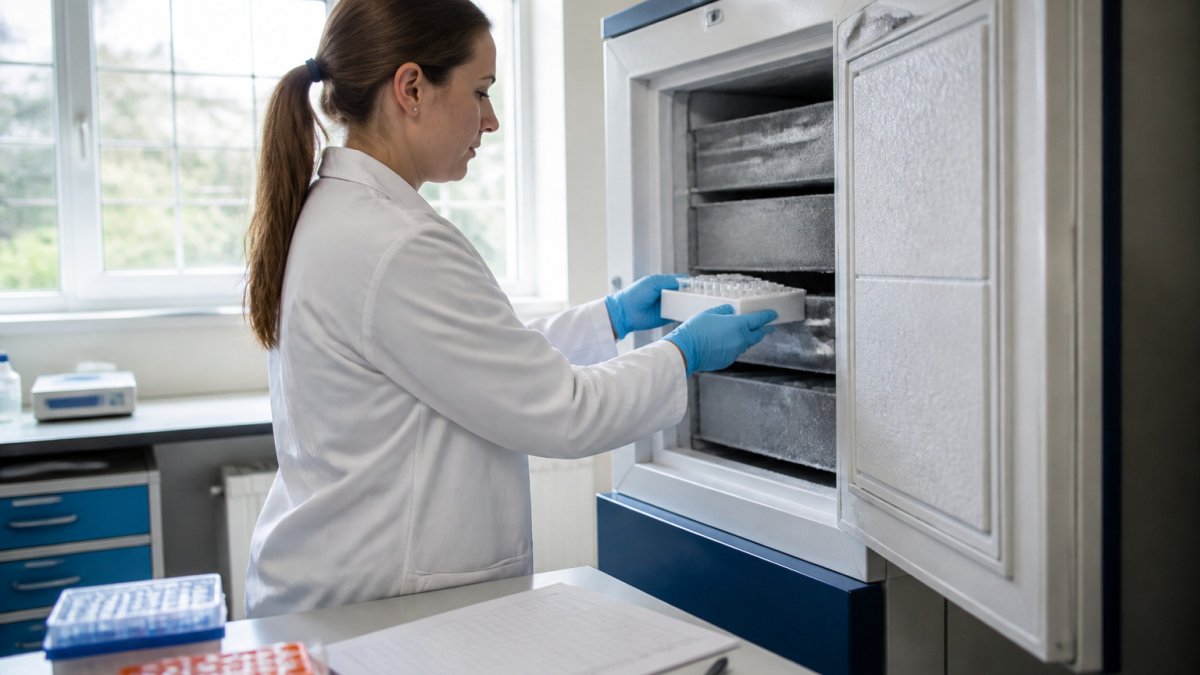
Freezer storage at -20°C is the usual choice for the dry form. The vial should stay sealed until it reaches room temperature before opening. Opening a cold vial invites condensation, and moisture is the enemy of a dry peptide.
Refrigerated storage at 2-8°C works for short periods, such as the days between delivery and planned use. It is not a substitute for a freezer over months. Room temperature exposure should be kept to a minimum during weighing and dispensing.
A peer-reviewed comparative study of peptide storage over time reported that colder storage appeared to slow degradation in solution, which supports keeping dry material cold as well.
View the complete research peptide catalogue →
Reconstituted Peptide Storage: Why Solutions Degrade Faster
Once a peptide is dissolved, the situation changes. Peptides in solution are far more vulnerable to chemical breakdown, including hydrolysis, oxidation and aggregation.
Solvent choice, pH and concentration all influence how quickly a solution degrades. A solution that sits at 4°C for a week can show measurable loss of intact peptide, while the same peptide kept frozen as lyophilised powder may show little change over the same period.
How Peptide Freeze-Thaw Cycles Affect Stability
Each freeze-thaw cycle stresses a peptide. Ice crystal formation, concentration shifts during freezing, and temperature swings during thawing can all damage the molecule or cause it to aggregate.
The effect is most noticeable in solution, but repeated handling of dry material also introduces condensation risk if vials are opened cold. Many laboratories therefore limit how many times a given aliquot is thawed.
Light, Humidity and Other Factors Beyond Freezer Temperature
Temperature gets most of the attention, but light and humidity matter too. Guidance from verifiedpeptides knowledge hub on lyophilised peptide storage highlights humidity and light alongside temperature, because they can degrade peptides even when the freezer is working correctly.
For a deeper look at preventing degradation from air exposure, see our guide on 5 Ways to Prevent Peptide Oxidation During Storage.
Setting Up Your Peptide Storage Protocol
A written protocol turns good intentions into consistent practice. Start with the storage temperature for each form of peptide, then add the handling rules that apply to your team.
Good practice starts with the basics. For wider guidance, read our 5 Best Practices for Laboratory Chemical Storage. Before you store a batch, confirm its purity and identity against the documentation; our guide on how to read a peptide COA explains what to check. If you are running repeated experiments, managing batch consistency in peptide experiments helps keep results comparable over time. And if a batch needs documentation or storage specifications, you can enquire about laboratory research product documentation directly.
Frequently Asked Questions
Should peptides be stored in a fridge or freezer?
For long-term storage, most suppliers recommend a freezer rather than a fridge. GenScript advises storing lyophilised peptides at -20°C, and recommends that remaining material is kept in a freezer, preferably below -20°C, under dry conditions. A refrigerator at around 4°C can suit short-term use, but it does not offer the same stability over months. Always check the supplier's guidance for the specific material, and record the storage conditions alongside your batch COA.
What temperature should peptides be stored at?
The most widely cited standard for long-term peptide storage is -20°C or colder, and some suppliers prefer -80°C. A comparative study of storage conditions examined solutions held between 4°C and -80°C and reported that colder conditions appeared to slow degradation. The optimal temperature depends on the peptide's sequence, form and intended use, so confirm recommendations against the documentation supplied with your batch.
Do lyophilised peptides need to be kept frozen?
Lyophilised (freeze-dried) peptides are more stable than peptides in solution, and many suppliers recommend freezer storage at -20°C for long-term holding. Storage guidance also highlights keeping lyophilised material dry and away from bright light, because humidity and light can affect stability alongside temperature. Keep vials tightly sealed and allow them to reach room temperature before opening to limit condensation.