 listicle
Procurement Checklist for Research Laboratory Supplies
Table of Contents
- Procurement Checklist for Research Laboratory Supplies: A Practical Overview
- Checklist 1: Clarify Specifications Before You Request a Quote
- Checklist 2: Vet Suppliers, Documentation and Delivery Terms
- Checklist 3: Managing Batch-Specific COA Documentation
- Checklist 4: Use a Laboratory Equipment Procurement Template
- Benefits of Outsourcing Laboratory Procurement Services
- Common Procurement Mistakes in Research Laboratories
- Conclusion: Building a Repeatable Procurement Routine
- Frequently Asked Questions
Last Updated: September 22, 2026
Procurement Checklist for Research Laboratory Supplies: A Practical Overview
A procurement checklist for research laboratory supplies is a structured list that confirms specifications, supplier credentials, documentation and delivery terms before any order is placed. At JGPep+, we supply peptides and laboratory materials for in vitro and analytical work. We often observe common issues in purchase requests, such as vague product names, missing batch records, and unclear delivery terms. This guide gives you four checklists that cover the full cycle, from writing a specification to filing a Certificate of Analysis (COA) once the box is open. Work through them in order and you build a repeatable routine rather than a scramble every time a reagent runs low.
Checklist 1: Clarify Specifications Before You Request a Quote
Define the material before you ask anyone to price it. A quote is only as good as the specification behind it, and suppliers cannot be held to a standard you never stated.
Work through this list before the request goes out:
- Confirm the exact product name, catalogue reference and stated strength or nominal amount
- State the quantity and the unit it is sold in (vial, pack, millilitre, milligram)
- Note the purity or grade required for your method
- Record the physical form you need (lyophilised powder, solution, kit)
- Specify storage conditions the supplier must confirm (for example, -20°C on arrival)
- State whether a batch-specific COA must accompany the shipment
- Note any documentation your institution requires, such as a safety data sheet
- Set the delivery window your experiment actually needs
A common mistake is ordering from a vague listing because it is cheaper. If the listing says only "research peptide" with no stated strength, you cannot compare it with anything, and you cannot prove later that what arrived matches what you ordered. The UK Health and Safety Executive guidance on laboratory safety is a useful reference for the documentation standards laboratories are expected to maintain.
Checklist 2: Vet Suppliers, Documentation and Delivery Terms
Vet the supplier with the same rigour you apply to the material. A reliable supplier answers documentation questions before the order, not after.
- Confirm the supplier's identity, trading address and contact route
- Ask to see a sample batch-specific COA before ordering
- Check that stated strengths, nominal amounts and catalogue references are published clearly
- Confirm dispatch method and whether tracking is included
- Clarify delivery thresholds and any charges that apply below them
- Ask what happens if the batch does not match the COA on arrival
- Confirm the returns or replacement process in writing
- Check lead times against your experiment schedule
For UK laboratories, domestic dispatch matters more than it first appears. Orders held at customs can derail a publication deadline, and no amount of good pricing compensates for a week of lost bench time. JGPep+ offers tracked UK dispatch and free delivery on orders over £100, which can support smaller teaching-lab orders.
Checklist 3: Managing Batch-Specific COA Documentation
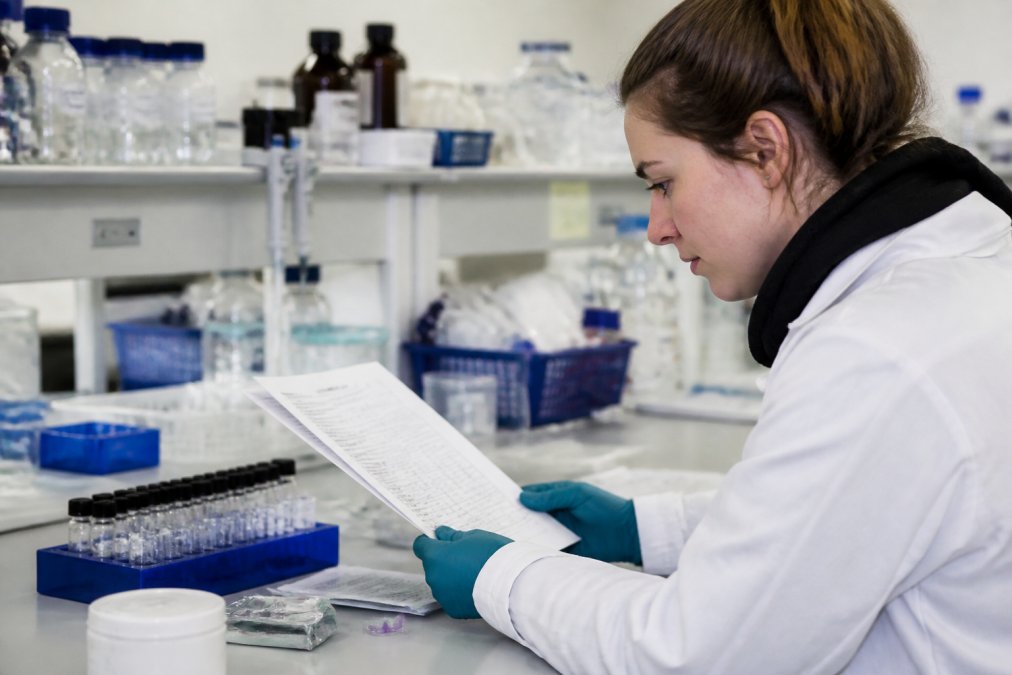
Managing batch-specific COA documentation means matching every vial you receive to the certificate issued for that exact batch, then filing both together so the record survives an audit or a publication review. A generic certificate covering a product line tells you nothing about the vial in your hand.
Build the habit around these steps:
- Record the batch or lot number from the vial label on receipt
- Retrieve the COA for that batch number, not the product page
- Check that stated identity, strength and purity on the COA match the label
- File the COA with the receiving record and the order reference
- Note the storage conditions and the date the vial was opened
- Flag any discrepancy to the supplier before the material is used
- Keep the record for as long as your institution requires
Batch-to-batch variability can impact experiment reproducibility. If one batch performs differently from the next, the COA can provide evidence of what changed. JGPep+ provides a batch-specific COA for every product, so the certificate you check on arrival is the one issued for that batch.
Checklist 4: Use a Laboratory Equipment Procurement Template
A laboratory equipment procurement template is a reusable document that carries the same fields through every purchase, so nothing depends on who happens to be ordering that week. It works for consumables as well as instruments.
View the complete research peptide catalogue →
| Field | What to Record | Example Entry |
|---|---|---|
| Catalogue reference | Supplier's unique code | PEP-1042 |
| Stated strength | Amount per vial | 5 mg |
| Quantity | Units required | 3 vials |
| Batch number | From the vial label | Recorded on receipt |
| COA status | Filed or outstanding | Filed 22/09/2026 |
| Storage condition | Required on arrival | -20°C |
| Delivery terms | Method and threshold | Tracked, free over £100 |
| Discrepancy notes | Any mismatch found | None |
Keep one template per supplier category and review it each term. The template does the remembering so your team does not have to.
Benefits of Outsourcing Laboratory Procurement Services
Outsourcing laboratory procurement services moves the administrative load of sourcing, vetting and documentation to a specialist, freeing bench time for the work that generates results. Many laboratories find that outsourcing can lead to greater consistency in specifications, documentation standards, and supplier checks across orders.
The trade-offs are real, though. You lose some direct control over lead times, and you need a clear agreement on who holds the COA records. For a small teaching lab ordering in modest quantities, the overhead of a formal outsourcing arrangement often outweighs the benefit. For a multi-project research group juggling dozens of suppliers, it usually pays for itself in recovered time.
Common Procurement Mistakes in Research Laboratories
Most procurement failures can be attributed to a handful of recurring errors. Here are some common issues and what to do instead.
- Ordering from a vague listing. No stated strength or catalogue reference means no basis for comparison. Insist on clear identification before you order.
- Accepting a generic COA. A product-line certificate does not describe your vial. Ask for the batch-specific document every time.
- Leaving delivery terms to chance. Confirm dispatch method, tracking and thresholds before the order, not after it is late.
- Skipping the receiving check. Compare the label to the COA on arrival. Catching a mismatch early is far cheaper than discovering it mid-experiment.
- Storing without recording. Note the opening date and storage condition. Untracked vials lose their provenance quickly.
- Chasing the lowest price alone. A price that appears significantly lower than others may sometimes indicate thinner documentation or inconsistent batches. It is advisable to weigh price against verifiable records.
Conclusion: Building a Repeatable Procurement Routine
The four checklists in this guide exist to turn procurement from a reactive scramble into a routine you can hand to anyone on the team. Fix the specification, vet the supplier, match every vial to its batch COA, and record it all in one template. That sequence is what separates a laboratory that reproduces its results from one that keeps chasing unexplained variation.
Frequently Asked Questions
What are the key factors to consider when sourcing laboratory research materials?
Start with specification clarity: state the required strength, nominal vial contents and catalogue reference before requesting quotes. Then check supplier documentation, particularly whether a batch-specific COA is issued for each lot rather than a generic certificate. Confirm dispatch arrangements, delivery times and whether pricing is quoted in GBP with any import implications made clear. Finally, check the supplier's stated research-use-only position, since materials sold for in vitro and analytical work should never be presented as medicines.
How do you ensure quality control in laboratory supply procurement?
Build quality checks into the order process rather than relying on trust. Request the batch-specific COA before purchase, verify that stated purity and identity match the specification you ordered, and record the batch number against the delivery note on arrival. Retain samples from each lot so any later discrepancy can be traced. If a batch fails to match its documentation, raise it with the supplier immediately and agree a replacement or refund in writing.
What documentation is required for research-grade laboratory supplies?
At minimum, expect clear product identification, stated strength or concentration, nominal vial contents and a batch-specific Certificate of Analysis covering the lot you receive. For equipment, ask for warranty terms, maintenance schedules and any compliance testing records. Keep all documentation filed against the purchase order number so it can be retrieved during an audit or when comparing batches across a long-running study.
How can outsourcing procurement improve laboratory efficiency?
Outsourcing shifts repetitive tasks such as quote chasing, vendor correspondence and order tracking to a specialist, freeing research staff to focus on bench work. It also consolidates invoicing and can improve price consistency across sites. The main benefits of outsourcing laboratory procurement services show up in reduced administrative hours and fewer delayed deliveries, though you still need internal oversight of specifications and batch documentation.
What are the regulatory considerations for purchasing non-clinical research materials?
Materials intended for in vitro and analytical research are not medicines and must be bought and used on that basis. Check that the supplier states this clearly and does not make therapeutic claims. Where hazardous substances are involved, ensure COSHH assessments are in place before the material arrives, and follow your institution's waste disposal rules. Keep batch records and COAs on file to support traceability if your work is later reviewed.