 comparison
Lab Procurement Software vs Manual Tracking: 2026 Comparison
Table of Contents
- Lab Procurement Software vs Manual Tracking: The Core Differences
- Quick Comparison: Software vs Manual Tracking at a Glance
- The Real Cost of Manual Procurement Processes
- Lab Inventory Management Software Features That Matter
- Benefits of Outsourcing Laboratory Procurement Services
- Pros and Cons: Which Approach Suits Your Laboratory?
- Frequently Asked Questions
Last Updated: September 29, 2026
Lab Procurement Software vs Manual Tracking: The Core Differences
The choice between lab procurement software and manual tracking comes down to one question: how much visibility do you need into where your budget, stock and time actually go? At JGPep+, we supply research materials to laboratories that track everything from peptide batches to consumable stock, and the split between spreadsheet-based and software-based systems is sharper than most teams expect.
Lab procurement software is a digital system that centralises purchase requests, supplier records, inventory levels and budget tracking into a single searchable platform. Manual tracking is the spreadsheet-and-email approach most small labs still run, and it works until it quietly stops working.
Below, we break down how each method behaves day to day, what it really costs and which suits your lab.
How manual tracking works in practice
Manual tracking relies on spreadsheets, shared inboxes and a nominated person who "knows where everything is."
A researcher logs a request in a spreadsheet, emails a supplier, waits for a reply, then updates the sheet when the order lands. Stock levels get checked by walking to the freezer.
The system is cheap to start and familiar to everyone. It also breaks the moment that nominated person takes leave. Duplicate orders happen, spend becomes invisible until the invoice arrives, and batch records end up scattered across inboxes.
For a teaching lab ordering small quantities occasionally, that trade-off is acceptable. For anything running continuous analytical work, it is a slow leak.
How lab procurement software changes the workflow
Lab procurement software replaces the walk-and-check routine with a live record. Requests route through approval, orders link to stock levels, and every item carries a traceable history.
The practical difference shows up in three places:
- Reordering: stock thresholds trigger requests before a run stalls
- Documentation: batch certificates and supplier records attach to the item, not to someone's inbox
- Spend visibility: budget tracking updates as orders are placed, not weeks later
That last point matters most to principal investigators. You cannot defend a budget you cannot see.
Quick Comparison: Software vs Manual Tracking at a Glance
| Factor | Manual Tracking | Lab Procurement Software | Better Option |
|---|---|---|---|
| Setup time | Immediate | Days to weeks | Manual |
| Upfront cost | Minimal | Subscription fee | Manual |
| Stock accuracy | Depends on one person | Live, shared record | Software |
| Batch documentation | Scattered across emails | Attached to each item | Software |
| Budget visibility | After invoicing | In real time | Software |
| Duplicate orders | Common | Blocked by approval flow | Software |
| Best for | Small teaching labs | Continuous research | Depends on scale |
The table tells a simple story. Manual tracking wins on cost and speed to start. Software wins on everything that affects reproducibility.
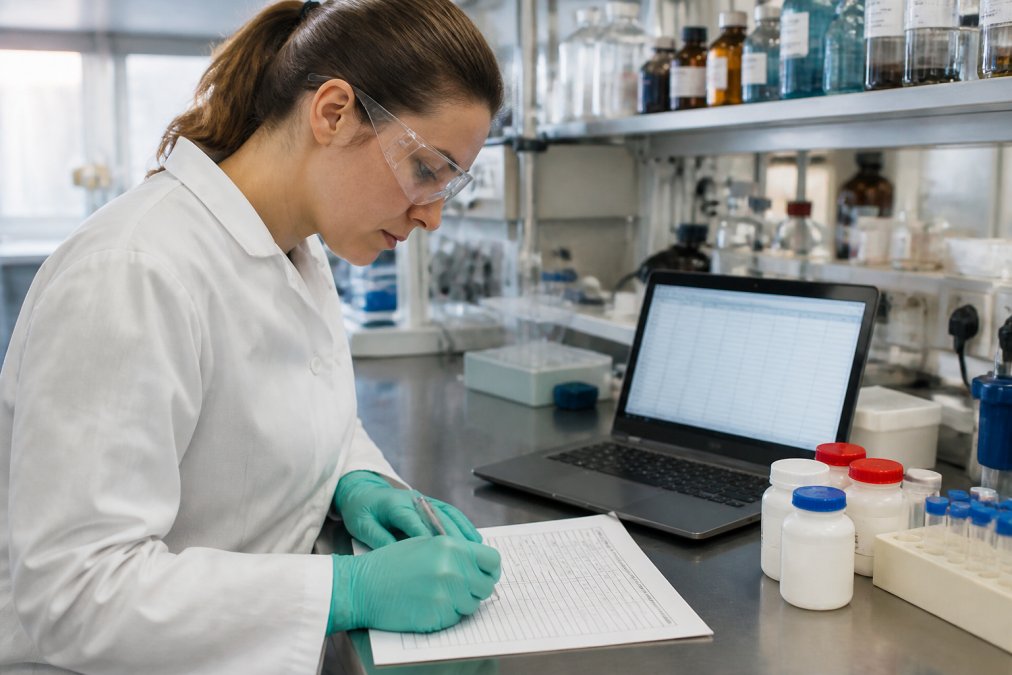
The Real Cost of Manual Procurement Processes
The cost of manual procurement processes rarely appears as a line item. It hides in staff hours, duplicated orders and stalled experiments.
A common mistake is counting only the price of the spreadsheet, which is free. The real expense is the researcher spending part of every week reconciling deliveries instead of running assays.
Three costs tend to surface:
- Time: order chasing, invoice matching and stock counting fall on qualified staff
- Duplication: without a shared live record, two people order the same item
- Delay: a missed reorder point stops a run mid-sequence
For a small teaching lab, those costs are tolerable. For a facility running batch-specific analytical work, they compound quickly. The honest position is that manual tracking is not expensive because of what you buy. It is expensive because of what it consumes.
Lab Inventory Management Software Features That Matter
Not every feature in a procurement platform earns its place. For research labs, four capabilities do most of the work.
Batch traceability is the first. Every item should link to its supplier documentation, including the certificate of analysis, so a reviewer can verify a batch months later without hunting through email.
Threshold-based reordering is the second. Set a minimum stock level, and the system raises a request before the shelf is empty.
Approval workflows come third. A simple two-step approval stops duplicate orders without slowing routine purchases.
View the complete research peptide catalogue →
Supplier records round it out. Keeping supplier terms, lead times and past performance in one place makes renewal decisions evidence-based rather than habitual.
Match the tool to the problem you actually have.
Benefits of Outsourcing Laboratory Procurement Services
The benefits of outsourcing laboratory procurement services extend beyond convenience. Outsourcing moves supplier management, documentation and dispatch to a specialist, so your team stops chasing orders.
For labs that need documented, batch-specific materials, working with a specialist supplier removes an entire layer of administration. JGPep+ supplies research peptides and laboratory materials with clear product identification, stated vial contents and a batch-specific certificate of analysis for every product, alongside tracked UK dispatch and free delivery on orders over £100.
That documentation model matters when a reviewer asks you to prove what was in a vial. A supplier that provides batch records on request saves your lab the audit scramble.
Outsourcing is not right for every lab. Facilities with unusual bespoke requirements may still need direct supplier relationships. But for routine research materials, the time saved is real.
Pros and Cons: Which Approach Suits Your Laboratory?
Manual tracking suits small teaching labs with low order volumes and straightforward stock. Software suits facilities running continuous work where reproducibility and budget visibility matter.
Here is the honest split:
Choose manual tracking if:
- You order a handful of items a month
- One person can hold the process without risk
- Your documentation needs are simple
Choose lab procurement software if:
- You run continuous or parallel experiments
- Batch traceability is a requirement, not a nice-to-have
- More than one person places orders
- You need to defend spend to a funder or department
Choose an outsourced supplier if:
- You want documentation handled for you
- You need reliable dispatch and clear batch records
- Your team's time is better spent on research than administration
The mistake most labs make is choosing based on price alone. A free spreadsheet that costs a researcher half a day a week is not free.
Manual tracking keeps working until your lab grows past the point where one person can hold it together. At that point, the fix is either software that tracks batches and budgets, or a supplier who documents every batch for you. JGPep+ provides clear product identification, stated vial contents and a batch-specific certificate of analysis for every product, with tracked UK dispatch and free delivery on orders over £100. Browse the full research catalogue to compare materials with documentation you can verify.
Frequently Asked Questions
What are the primary risks of manual lab procurement?
Manual tracking relies on spreadsheets, paper logs and email chains, which creates several risks. Data entry errors lead to over-ordering or stockouts, delayed approvals hold up experiments, and there is no automatic audit trail for compliance reviews. When several people update the same spreadsheet, version control breaks down and nobody is certain which figures are current. For labs working with batch-specific materials, losing track of Certificate of Analysis documents or expiry dates can invalidate results and waste both time and money.
How does lab procurement software improve inventory accuracy?
Lab procurement software links purchase orders directly to inventory records, so stock levels update the moment an order is placed or received. Barcode scanning and automated reorder points replace manual counts. This removes the double-entry problem where a purchase is logged in one system and the stock record updated separately. Most platforms also flag low-stock items before they run out, which matters when a specific batch of research material is needed for a time-sensitive analytical run.
Is automated procurement cost-effective for small research labs?
It depends on order volume and administrative overhead. A small teaching lab placing a handful of orders each month may find a spreadsheet adequate, though the hidden cost of manual procurement processes (staff time, errors, duplicate orders) still adds up. Many platforms offer tiered subscriptions and free trials, so a small lab can test whether the time saved justifies the monthly fee. For labs ordering frequently or managing multiple funding codes, the break-even point arrives quickly.
What features should I look for in lab procurement software?
Prioritise features that match your workflow: automated purchase order generation, approval hierarchies that reflect your institution's sign-off rules, budget tracking against departmental or grant codes, and supplier catalogue integration. For scientific work, inventory management software features such as batch tracking, expiry date alerts and COA document storage are essential. Check whether the platform integrates with your existing LIMS or finance system to avoid duplicate data entry.
How does digital procurement impact compliance and audit trails?
Digital procurement creates a timestamped record of every request, approval, purchase order and delivery. This makes internal audits and funder reviews far easier because you can trace a material from requisition to receipt in one place. Manual systems depend on reconstructing paper trails, which is slow and error-prone. For labs handling controlled or batch-specific research materials, an automatic audit trail also supports traceability requirements and helps demonstrate that procurement followed institutional policy.